Mold Remediation in Lincoln, NE — Honest Assessment & Removal
Water Damage Lincoln NE provides mold remediation in Lincoln, Nebraska — honest assessment, containment when it’s actually needed, HEPA-filtered removal, and structural drying per EPA and CDC guidance. No scare tactics, no “superfund” upsells. Call +1 (402) 227-8606 for an assessment.
24/7 emergency response across Lincoln & Lancaster County
From North Bottoms basements soaked by Salt Creek back-flooding to Near South rentals with chronic seepage, Lincoln’s mold problems start with water.
Let’s start with the sentence that defines how we work: not every mold problem needs full remediation, and any company that says otherwise is selling, not assessing. The mold industry has an upsell problem — full containment, negative air, hazmat theater for a two-foot patch of surface growth. We don’t do that. What we do: assess honestly from moisture readings and visible evidence, scope only what the problem actually requires, and tell you straight when a patch is a cleaning job rather than a remediation job. That honesty is also why you can trust us when we say a problem is serious — because we say it only when it’s true. Mold after basement flooding is Lincoln’s most common mold story, especially since the October 2026 historic downpour left hundreds of basements damp for days. Here’s the complete, hype-free guide.
The 24–48-Hour Window: Why Speed Decides Everything
The EPA states that mold can begin growing within 24–48 hours on wet drywall, wood, and carpet — which means the drying decisions you make in the first two days after water intrusion decide whether you get a drying job or a mold remediation job. Every day of delay multiplies the scope.
Understand what that window means in practice. Mold spores are everywhere, always — in your air, on your surfaces, harmless until they get sustained moisture and a food source. Wet drywall paper, damp wood framing, soaked carpet pad: that’s a buffet. Within 24–48 hours of wetting, colonies establish; within days they’re visible; within a week or two they’re inside wall cavities and under flooring where you can’t see them. This is why “we’ll deal with it this weekend” is the most expensive sentence in water damage. A basement extracted and dried starting day one is a drying job. The same basement left damp for five days is a demolition job — wet drywall cut out, carpet pad in dumpsters, framing HEPA-vacuumed and treated. As the EPA puts it: “mold can begin growing within 24–48 hours” on wet drywall, wood, and carpet. If your basement flooded in the October 2026 storm and never fully dried — musty smell, spots on drywall, buckling flooring — you’re months past the window, and what’s growing now has had a long, comfortable life. Call +1 (402) 227-8606 for an assessment before it spreads further.
24–48 hours
Mold growth window
EPA — decides drying job vs. demolition job
$2,300–$6,200
Mold remediation range
Angi 2026 national benchmark
10+ square feet
EPA threshold for professional remediation
Above this, it's a remediation job
30–50%
Target basement humidity
Properly sized dehumidifier, especially in high-water areas
When You Need Remediation vs. When You Don’t
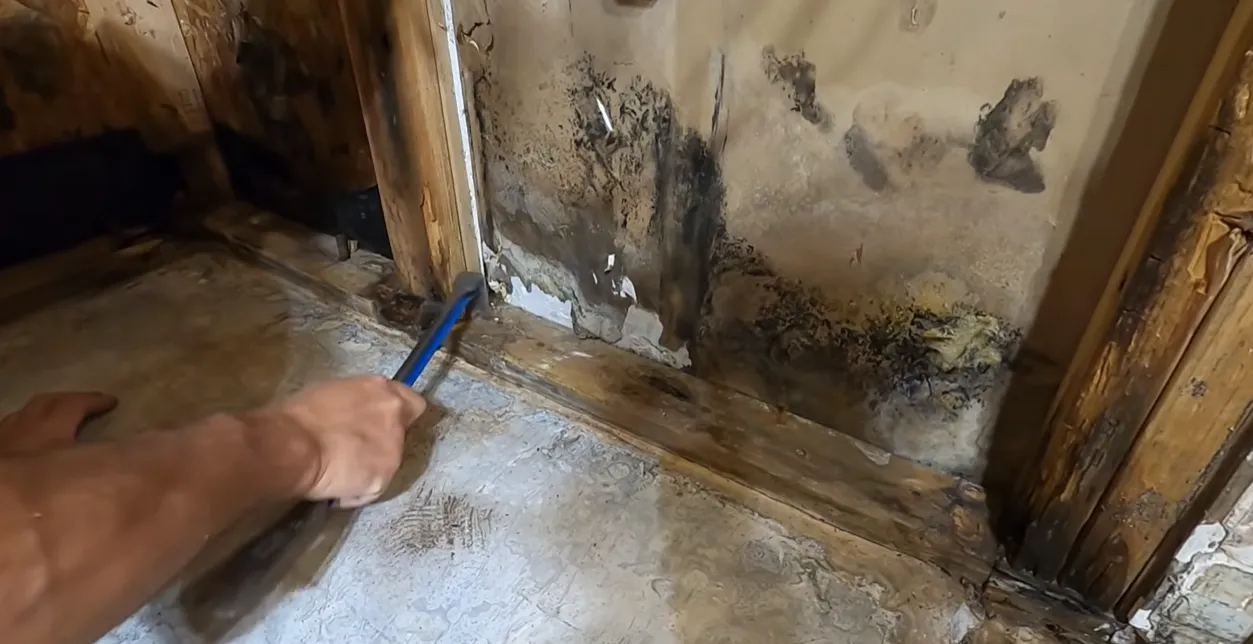
You need professional remediation when mold covers large areas (roughly 10+ square feet per EPA guidance), is inside wall cavities or HVAC, followed sewage contamination, or keeps returning after cleaning. You don’t need it for small surface patches on hard, non-porous materials — that’s a cleaning job, and we’ll tell you so.
The honest scoping framework, straight from EPA and CDC guidance: Remediation (containment, HEPA filtration, removal): growth across significant drywall areas, mold inside wall cavities discovered during flooded basement drywall removal, growth on or in insulation and carpet pad, any mold following Category 3 sewage contamination (porous materials are removed, not cleaned), mold in HVAC components or ductwork, and recurring growth that returns after proper cleaning — recurrence means the moisture source is still active. Cleaning (no full remediation): small patches (a few square feet) on concrete, tile, glass, or metal — scrub with detergent, dry thoroughly, fix the moisture source. The gray zone: moderate growth on finished surfaces where the extent behind the material is unknown — this is where moisture meters and sometimes small inspection openings earn their keep, and where an honest contractor investigates before quoting. What we won’t do: sell you containment for a cleaning job, or “treat” mold inside drywall with a spray bottle. Mold in porous material doesn’t die from surface products — the material comes out. That’s not upselling; it’s physics.
Our Remediation Protocol, Step by Step
Professional mold remediation follows a defined sequence: moisture source corrected and area dried, containment with negative air pressure for significant growth, HEPA-filtered air scrubbing, physical removal of contaminated porous materials, HEPA vacuuming and treatment of remaining surfaces, and post-remediation verification with moisture readings. We follow EPA/CDC guidance and ANSI/IICRC S500 principles — never spray-and-pray.
Step 1 — Find and fix the moisture. Remediation without fixing the water source is landscaping a swamp. Burst pipe repaired, leak stopped, drainage corrected, drying underway — mold work starts only after the moisture story is resolved.
Step 2 — Contain (when warranted). For significant growth, we isolate the work area with polyethylene barriers and negative air pressure so spores don’t migrate into clean areas of your home. For small contained jobs, localized containment suffices — we match the containment to the problem, not to the invoice.
Step 3 — Remove contaminated porous materials. Drywall, insulation, carpet pad, and other porous materials with growth are cut out (with a margin beyond visible growth), bagged, and disposed of. This is the step spray-bottle “mold treatments” skip, and it’s the step that actually solves the problem.
Step 4 — HEPA vacuum and treat. Remaining structural surfaces — framing, concrete, subfloor — are HEPA-vacuumed to capture spores, then treated with appropriate antimicrobial products. HEPA air scrubbers run throughout to capture airborne spores.
Step 5 — Verify dry. Post-remediation moisture readings confirm materials are at dry standard. Then rebuild: drywall, flooring, trim, paint — handled in-house as a registered Nebraska contractor, one company from containment to finished wall. If the mold followed a burst pipe, the plumbing repair and the remediation are coordinated as one job.
Health Effects: What the Science Actually Says
Mold exposure can trigger allergic reactions, asthma attacks, and respiratory irritation — particularly in sensitive individuals — and the CDC advises removing mold regardless of type rather than testing to identify species. You don’t need a $500 species test to justify removing visible growth; you need the moisture fixed and the material out.
Here’s the hype-free health picture. The established science: mold produces allergens and irritants; sensitive people — those with asthma, allergies, compromised immune systems, chronic lung conditions — can react with sneezing, congestion, eye irritation, wheezing, and asthma attacks. Damp indoor environments generally are associated with respiratory symptoms. What the science does not support: the “toxic black mold” panic used to sell five-figure remediations. Color doesn’t determine toxicity, and the appropriate response to visible growth is the same regardless of species — remove it, fix the moisture, dry the structure. That’s the CDC’s position too: don’t bother identifying the species, just remediate. Practical guidance for your household: keep people with respiratory sensitivity away from active growth and active remediation work, don’t run HVAC that pulls basement air upstairs during the job (we manage this with containment and negative air), and don’t disturb large growth yourself — disturbance releases spores. If anyone in the home has significant health concerns, talk to your doctor; we’re restoration experts, not physicians, and we’ll never play one.
Water Damage Can't Wait
Every hour you wait, the damage spreads. Call now and get a straight answer about timing and next steps.
Mold After Lincoln’s Floods: The October 2026 Aftermath
Hundreds of Lincoln basements that flooded in the October 2026 historic downpour never fully dried — and months later, they’re growing mold behind baseboards, under flooring, and inside wall cavities. Musty smell, spots on drywall, buckling or cupping floors, and allergy symptoms that started after the flood are the classic signs.
This is the slow-motion disaster we’re still seeing across the city. The storm hit October 1–2; plenty of homeowners pumped out the standing water, ran a box fan for a weekend, and declared victory — while moisture sat inside wall cavities at 20%+ and carpet pad stayed damp for weeks. Now the signs are surfacing: the musty basement smell that wasn’t there before, dark spots creeping up drywall, laminate buckling, hardwood cupping, family members sneezing every time they go downstairs. If any of that sounds familiar, the growth has had months — and it’s not getting better on its own. The fix is the same protocol above: assess the true extent with moisture meters (and inspection openings where needed), remove what’s contaminated, dry to standard, rebuild. And the prevention lesson for next time — because there will be a next time — is in our sump pump failure guide: battery backup, alarms, and drying that starts within hours, not weeks. For what professional drying costs before mold ever starts, see our cost guide — drying benchmarks far below remediation’s $2,300–$6,200 national range (Angi, 2026).
Preventing Mold After Water Damage
Mold prevention is drying done right: extract standing water immediately, run commercial dehumidification until moisture readings hit dry standard (not until surfaces “feel dry”), remove unsalvageable porous materials promptly, and keep indoor humidity below 60% — ideally 30–50%. Prevention is always cheaper than remediation.
The prevention checklist, whether the water came from a flood, a leak, or a backup: (1) Speed — extraction within hours, drying equipment running within a day. (2) Real dehumidification — a home dehumidifier in a wet basement is a gesture; commercial LGR units actually move the moisture. Run until meters confirm dry standard, typically 3–5 days. (3) Remove what can’t dry — carpet pad, soaked insulation, and drywall that wicked water don’t “dry out”; they come out. (4) Airflow — air movers across all wet surfaces, including inside opened wall cavities. (5) Verify — moisture readings logged to dry standard, not guesswork. (6) After the job, keep basement humidity in the 30–50% range with a properly sized dehumidifier, especially in Near South and North Bottoms homes where groundwater runs high. Do this and mold never gets its 24–48-hour window. Skip it and you’ll meet us again — for the bigger job. See our water damage repair page for the complete drying-to-rebuild process.
Mold Remediation FAQs
Mold questions from Lincoln homeowners — the 24–48-hour window, when remediation is really needed, health effects, and prevention. Seeing spots or smelling mustiness after a flood? Call Water Damage Lincoln NE at +1 (402) 227-8606. We scope honestly — no scare tactics.
My basement has mold after it was flooded. What should I do?
Don’t just bleach the surface — mold inside wall cavities and under flooring won’t die from a spray bottle. Small patches on concrete can be cleaned, but growth on drywall, carpet, or insulation means the material must be removed and the area dried to standard. Call +1 (402) 227-8606 for an honest assessment.
How long does it take for mold to start after a flooded basement?
The EPA says mold can begin growing within 24–48 hours on wet drywall, wood, and carpet — starting when materials get wet, not when you notice. A basement that sat damp all weekend needs aggressive drying and likely removal of wet porous materials. Fast professional drying on day one is the difference.
What kills mold after a flood?
Removal kills mold after a flood — not bleach, not sprays. Mold growing in drywall, carpet, insulation, or wood must be physically removed along with the contaminated material; surface products can’t reach growth inside porous materials. After removal, the area is HEPA-vacuumed, treated, and dried to standard. Anyone selling you a spray-on miracle for mold inside walls is selling fiction.
Is it safe to stay in a house with mold in the basement?
For most healthy adults, limited mold in an unfinished basement is a problem to fix, not an evacuation — but keep the basement door closed, don’t run HVAC that pulls basement air upstairs, and don’t disturb large growth. Anyone with asthma, allergies, or immune issues should be more cautious — call +1 (402) 227-8606.
Flooded basement, finding mold as we cut out drywall. …
Stop cutting — you’re releasing spores with every cut. Mist lightly to suppress dust, seal the work zone with plastic, and wear an N95. Then call +1 (402) 227-8606: growth inside wall cavities needs professional remediation — removal, HEPA vacuuming, and verified drying, not more DIY demo.
Ripping up carpet from finished basement that flooded- worried about mold spreading
Valid worry — tearing carpet releases whatever grew in the pad. Wear an N95 and gloves, mist lightly, bag the pad immediately (flood-wet pad is trash — never try to save it), and keep HVAC off. If you find growth on the subfloor or tack strips, stop and call +1 (402) 227-8606.
Basement demo, some mold. Neg pressure to demo?
For more than a small patch, yes — negative air with HEPA filtration keeps spores from migrating while you open walls. Seal the work zone with polyethylene, exhaust the HEPA unit outside, and wear respiratory protection. For extensive growth or post-sewage mold, call professionals — +1 (402) 227-8606.
Basement flooded. Need mold remediation?
Maybe — it depends on how long materials stayed wet. If drying started within a day and readings confirm dry standard, probably not. If the basement sat wet for days, there’s visible growth, or you smell mustiness, assume remediation is needed. Call +1 (402) 227-8606 — we’ll tell you straight either way.
House flooded – what do I spray to prevent mold and …
Nothing you spray prevents mold — drying prevents mold. Get standing water out, run real dehumidification until moisture meters confirm dry standard, remove unsalvageable porous materials, and keep air moving. Antimicrobial products have a role on clean, dry structural surfaces after remediation — but no spray compensates for materials that stayed wet. Dry it fast, dry it verified.
Can you live in a house with a flooded basement?
With clean water and power safely off to the basement, usually yes — upstairs living space is unaffected. With sewage backup, no: Category 3 black water carries pathogens, and you should stay out of the basement and avoid running HVAC until professional cleanup and sanitizing are complete. When in doubt, keep everyone upstairs and call us.
Get an Honest Mold Assessment — Call Now
Mold doesn’t wait, and neither should you. Call +1 (402) 227-8606 for an honest mold assessment anywhere in Lincoln, NE — we’ll scope only what the problem actually requires, in writing. Prefer to reach out online? Use our contact page.
Water Damage Lincoln NE · 2805 S 48Th St, Lincoln, NE 68506 · +1 (402) 227-8606