Flood Cleanup Services in Lincoln, NE
Water Damage Lincoln NE provides flood cleanup in Lincoln, Nebraska — post-storm debris removal, contaminated-water extraction, sanitization, contents handling, and structural drying after flash floods and creek overflows. Call +1 (402) 227-8606. When Salt Creek leaves its banks or Antelope Creek floods by the Devaney Center, the cleanup afterward is our specialty.
24/7 emergency response across Lincoln & Lancaster County
Flood cleanup is not the same as a burst-pipe cleanup. Floodwater is Category 3 by definition — it has crossed streets, yards, and sewer systems, picking up sewage, fuel, chemicals, and bacteria. It leaves mud and debris, destroys porous materials, and triggers insurance questions that clean-water jobs never raise. Lincoln learned this the hard way on October 1–2, 2026: 6.15 inches of rain in one day at Lincoln Airport — the wettest day in city history — with up to 10.41 inches measured in the Salt Creek Watershed, ~20 rescues near 11th & Cornhusker, boat rescues at 9th & Garber and NW 31st & Airport Rd, and a foot of water across the road at 70th & Adams. Governor Jim Pillen signed an emergency proclamation. This page is the service: what professional flood cleanup involves, what happens to your belongings, and how we get a flooded building safe and dry again. (For the full story of that storm — timeline, rescue locations, and the 30-day action plan — see our October 2026 flood hub.)
What Flood Cleanup Actually Involves — and Why It’s Not a Regular Water Job
Flood cleanup is a distinct service because floodwater is Category 3 contaminated water carrying sewage, chemicals, and debris — which changes everything: protective protocols, what gets demolished versus dried, how contents are handled, and how the insurance claim is built. A burst pipe is a drying job; a flood is a decontamination job with drying inside it.
The sequence runs: safety assessment and source evaluation (is water still rising? is power safe?), contaminated-water extraction with full protective gear, debris and mud removal, demolition of unsalvageable porous materials, disinfection of all remaining surfaces, contents cleaning or disposal decisions, then structural drying to measured dry standard. Every step assumes contamination until proven otherwise — because after a storm like October 2026, Lincoln Fire & Rescue’s own crews treated the water as hazardous, putting life jackets on rescued occupants specifically to protect them from it. Flood cleanup also carries the insurance layer from day one: standard homeowners and commercial policies exclude flood damage without separate flood coverage, so documentation has to be airtight whether the claim goes to a flood policy, a homeowners policy, or your own pocket. Our insurance claims guide covers the flood-exclusion reality in plain English.
6.15 in
Record single-day rainfall
Oct 1–2, 2026 — Lincoln's wettest day ever
24–48 hours
EPA mold window on wet materials
Act within it or the job doubles
12–24 in
The flood cut — contaminated drywall that must go
Non-negotiable for Category 3 water
1,151
NFIP policies in Lancaster County
vs ~122,600 households — most had no flood coverage
Debris Removal and Demolition Decisions: What Comes Out, What Stays
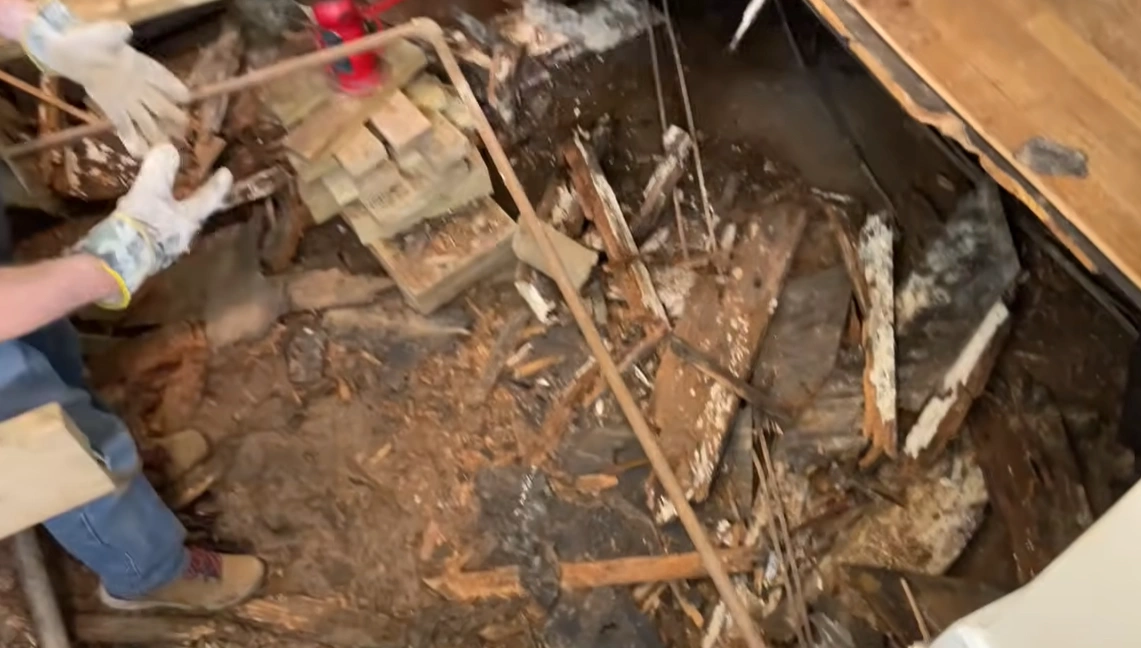
Flood cleanup starts with removal — mud, silt, debris, and every porous material the contaminated water touched: carpet and pad, the bottom 12–24 inches of drywall (the flood cut), wet insulation, and compromised baseboards and trim. These materials can’t be reliably decontaminated, so they come out. What stays is what can be truly cleaned and dried: framing, subfloor, concrete, and hard-surface finishes.
The flood cut is the signature move of flood cleanup, and it’s non-negotiable for Category 3 water. Drywall wicks contaminated water upward 12–24 inches; cutting at a clean line above the wick mark removes the contaminated section while saving the upper wall. Insulation behind that drywall is worse — wet fiberglass loses its R-value, holds moisture against studs, and can’t be disinfected, so it goes. Carpet pad is a sponge for contaminants and is always discarded after floodwater; carpet itself is usually discarded too, though some commercial-grade carpet can be cleaned in place. We make these calls material by material and show you why — then document every removal with photos before disposal, because your adjuster needs to see what was there. Salvageable structure gets antimicrobial treatment and then enters the structural drying phase with daily moisture logs until it hits dry standard.
Sanitization: Treating Floodwater as the Contamination It Is
Sanitization after a flood means disinfecting every surface the water touched — after debris removal, after demolition, before drying — using EPA-registered antimicrobials applied to framing, subfloor, concrete, and remaining hard surfaces. This isn’t a mop with bleach; it’s a protocol: remove the contaminated material first, then disinfect what remains, because no disinfectant reliably penetrates saturated drywall or carpet pad.
Order matters: disinfecting before demolition wastes chemical on material that’s coming out anyway. The real sequence is extract → remove debris → demolish contaminated porous materials → HEPA-vacuum remaining surfaces → apply antimicrobial → then dry. Floodwater carries a genuine pathogen load — sewage bacteria, and in urban flooding, fuel and chemical runoff — which is why our crews work in full protective gear and why sewage in your basement is a genuine health question, not a scare tactic (see FAQs below). After sanitizing, mold remediation protocols take over if growth has started — mold begins within 24–48 hours on wet materials (EPA), and flood jobs that wait days for cleanup almost always need it.
Contents Handling: What Gets Saved, Cleaned, or Discarded
Contents handling is the inventory, triage, and cleaning of your belongings — furniture, electronics, documents, clothing, inventory — deciding item by item what can be cleaned and restored versus what contamination has destroyed. For businesses this includes stock and equipment; for homeowners it’s the contents of the flooded rooms. Every decision is photographed and logged for the claim.
The triage rules are straightforward. Hard, non-porous items — metal, glass, sealed plastic — clean up well with proper disinfection. Upholstered furniture, mattresses, and pillows that sat in floodwater are effectively never salvageable; contamination penetrates too deep to disinfect. Electronics that were submerged are usually done, though equipment that only got splashed may survive professional cleaning. Paper documents and photos get air-dried or freeze-dried if they’re valuable — a specialized process, but family photos and business records are worth it. Clothing and linens can often be saved with hot-water washing and disinfection, unless the contamination was severe. For larger losses we do a pack-out: contents are inventoried and moved to a dry area so structure work can proceed, then returned after rebuild. Business owners should read our commercial restoration page for how contents handling works around operating hours, and everyone should photograph everything before we move it — your own photos back up our inventory.
Water Damage Can't Wait
Every hour you wait, the damage spreads. Call now and get a straight answer about timing and next steps.
The October 2026 Flood: Why Lincoln Still Needs Flood Cleanup
The October 1–2, 2026 flood was Lincoln’s wettest day on record — 6.15 inches at the airport, breaking a 116-year record — and buildings that took water then may still need professional cleanup now. Floodwater trapped inside wall cavities, under flooring, and in insulation doesn’t dry on its own; it sits, grows mold, and rots framing quietly. If your building flooded in that storm and never got professional cleanup, the damage is still in there.
Here’s what made that storm a cleanup catastrophe rather than just a wet week. The rain fell faster than Salt Creek and its tributaries could carry it — Lincoln Fire & Rescue Battalion Chief Mark Majors explained the mechanism as “back flooding”: runoff causing streams and creeks to crest, “not because of the rainfall itself.” Back flooding pushes water into buildings far from any mapped floodplain — which is why roughly 40% of flood claims nationally come from outside the regulatory floodplain (FEMA). Basements flooded in neighborhoods that had never taken water, from the North Bottoms to areas near 70th & Adams. And the insurance aftermath was brutal: a Lincoln family whose basement flooded ankle-deep on September 30 faced, as local coverage reported, “significant financial losses because their insurance policy does not include coverage for flood damage” — the standard homeowners flood exclusion, discovered too late. If your building is still damp, still smells musty, or was never professionally dried after that storm, call +1 (402) 227-8606 — late cleanup beats no cleanup, and our flood hub has the full 30-day action plan.
Flood Cleanup and Your Insurance: The Exclusion You Need to Understand
Standard homeowners and commercial property policies exclude flood damage — water from overflowing creeks, storm surge, heavy-rain accumulation, and groundwater — unless you carry separate flood insurance, usually through the NFIP. Only about 1,151 NFIP policies exist in Lancaster County against roughly 122,600 households, which means most flooded Lincoln buildings have no flood coverage at all. Know where you stand before the next storm, not after.
The distinctions matter for your claim. Water from a burst pipe or a failed appliance inside your building is typically covered as sudden water damage — that’s a standard claim. Water that came from Salt Creek, from street flooding, or from rain overwhelming the storm system is flood, excluded without flood insurance. Sewer backup is its own category — excluded unless you bought the sewer-backup endorsement. And here’s the trap: many October 2026 losses involved more than one source — rain through a wind-damaged roof (possibly covered) plus creek water through the basement (excluded). We document the water’s source, path, and category meticulously so your claim gets every covered dollar it’s owed and you don’t waste months fighting over the rest. Our insurance claims guide walks through filing, and our cost guide gives honest benchmark ranges — national figures, clearly labeled, never invented Lincoln prices.
Frequently Asked Questions: Flood Cleanup in Lincoln
Straight answers to the questions Lincoln homeowners and business owners ask about flood cleanup — safety, contents, mold, insurance, and timelines. For flood damage right now, call +1 (402) 227-8606.
What does flood cleanup include?
Professional flood cleanup covers contaminated-water extraction, mud and debris removal, demolition of unsalvageable porous materials (carpet, pad, lower drywall, insulation), disinfection of all remaining surfaces, contents inventory and cleaning decisions, structural drying with daily moisture logs, and mold prevention or remediation. It’s a decontamination job with drying inside it — fundamentally different from a clean-water pipe leak.
Is floodwater dangerous to touch?
Yes. Urban floodwater is Category 3 contaminated water — it carries sewage, bacteria, chemicals, fuel, and debris. During the October 2026 flood, Lincoln Fire & Rescue crews protected rescued occupants from the water itself. Keep people and pets out of standing floodwater, don’t let children play in it, and leave the cleanup to crews in proper protective gear. If you must enter a flooded area, wear waterproof boots and gloves and wash thoroughly after.
Can a backed up sewer in your basement make you sick?
Yes — sewage carries bacteria, viruses, and parasites that cause gastrointestinal illness, skin infections, and respiratory problems, especially in children, elderly people, and anyone immunocompromised. This is why sewage and floodwater cleanup is a professional job with protective equipment, not a DIY mop-up. Keep everyone out of the affected area, don’t run the HVAC (it spreads contaminants), and call +1 (402) 227-8606 for Category 3 extraction and disinfection.
My basement has mold after it was flooded. What should I do?
Don’t just spray the surface — mold inside wall cavities, under flooring, and behind baseboards won’t die from a spray bottle. Small surface patches on concrete can be cleaned, but growth on drywall, carpet, or insulation means the material must be removed and the area dried to standard. If your basement flooded in the October 2026 storm and was never professionally dried, assume mold is growing somewhere hidden. Call +1 (402) 227-8606 for an honest assessment — see our mold remediation page for the full protocol.
What kills mold after a flood?
Removal kills mold — physically taking out the colonized material (drywall, carpet, insulation) — followed by drying the structure to standard and treating remaining surfaces with EPA-registered antimicrobials. Bleach on a surface stain doesn’t kill mold inside a wall cavity; it just bleaches the color while the colony keeps growing behind it. The real answer is demolition of what’s colonized, drying of what remains, and verification with moisture meters.
Is it safe to stay in a house with mold in the basement?
Small, contained mold in an unfinished basement with no HVAC connection is a lower risk; widespread mold, mold in finished living space, or mold with sewage contamination is not safe — especially for children, elderly residents, or anyone with asthma or respiratory conditions. Don’t run the HVAC if mold may be in the duct path. Get a professional assessment rather than guessing about your family’s air — call +1 (402) 227-8606.
Does homeowners insurance cover flood damage?
Standard homeowners policies exclude flood — water from overflowing creeks, heavy-rain accumulation, and groundwater — unless you carry separate flood insurance (usually NFIP). Sudden indoor water events like burst pipes are typically covered; floodwater is not. With only ~1,151 NFIP policies in Lancaster County against ~122,600 households, most flooded Lincoln buildings had no flood coverage in October 2026. Check your policy’s flood and sewer-backup endorsements now — our insurance claims guide explains the gaps.
How long does flood cleanup take?
Extraction and debris removal happen in the first day or two; demolition and sanitizing add several more days; structural drying typically runs 3–5 days after that with daily moisture readings; rebuild of removed drywall and flooring adds 1–3 weeks. A straightforward residential flood runs 2–4 weeks start to finish; larger commercial losses run longer. We give you a written timeline at inspection and update it daily.
Should I throw away everything that touched floodwater?
Not everything — but be ruthless about porous materials. Upholstered furniture, mattresses, pillows, carpet pad, and lower drywall that sat in floodwater are effectively never salvageable and should go. Hard non-porous items (metal, glass, sealed plastic) usually clean up fine; clothing often survives hot washing; valuable documents can be freeze-dried. Photograph everything before disposal — your adjuster needs the record. We’ll walk the triage with you item by item.
Who cleans up after a flood in Lincoln — the city or me?
You — for your building. The city (Lincoln Transportation and Utilities) handles streets, storm drains, and public infrastructure; LPSNRD manages the dams and levees; Lincoln Fire & Rescue handles water rescues. But water inside your building, your basement, your business — that’s the property owner’s responsibility, handled by a restoration company. For creek and floodplain questions, LPSNRD is the local authority; for the mess inside your walls, call +1 (402) 227-8606.
Call Water Damage Lincoln NE — Flood Cleanup Done Right
Floodwater doesn’t just get things wet — it contaminates, it hides inside your walls, and it starts growing mold within 48 hours. If the October 2026 storm — or the next one — put water in your building, call +1 (402) 227-8606 now for flood cleanup in Lincoln, NE: contaminated-water extraction, debris removal, sanitization, contents handling, and measured structural drying. The storm is over. The damage doesn’t have to continue.
Water Damage Lincoln NE · 2805 S 48Th St, Lincoln, NE 68506 · +1 (402) 227-8606