Burst Pipe Repair & Water Damage Restoration in Lincoln, NE
Water Damage Lincoln NE provides emergency burst pipe repair and water damage restoration in Lincoln, Nebraska — call +1 (402) 227-8606. Lincoln’s first freeze lands around Oct 12, and Jan–Feb freeze-thaw cycles split pipes in Hartley crawlspaces and Havelock garages. We extract water, dry the structure, and rebuild — fast, as a registered Nebraska contractor.
24/7 emergency response across Lincoln & Lancaster County
A burst pipe doesn’t announce itself politely. It splits at 2 a.m. in an unheated crawlspace, or lets go behind a wall while you’re at work, and by the time anyone notices, hundreds of gallons have soaked the drywall, the subfloor, and everything stored nearby. In Lincoln, the danger window opens with the first freeze around October 12 and runs through the January–February freeze-thaw cycles that punish older homes hardest. This page covers why Lincoln pipes burst, what to do in the first 15 minutes, what the damage looks like hour by hour, and how professional restoration puts your home back together.
Why Lincoln Pipes Burst
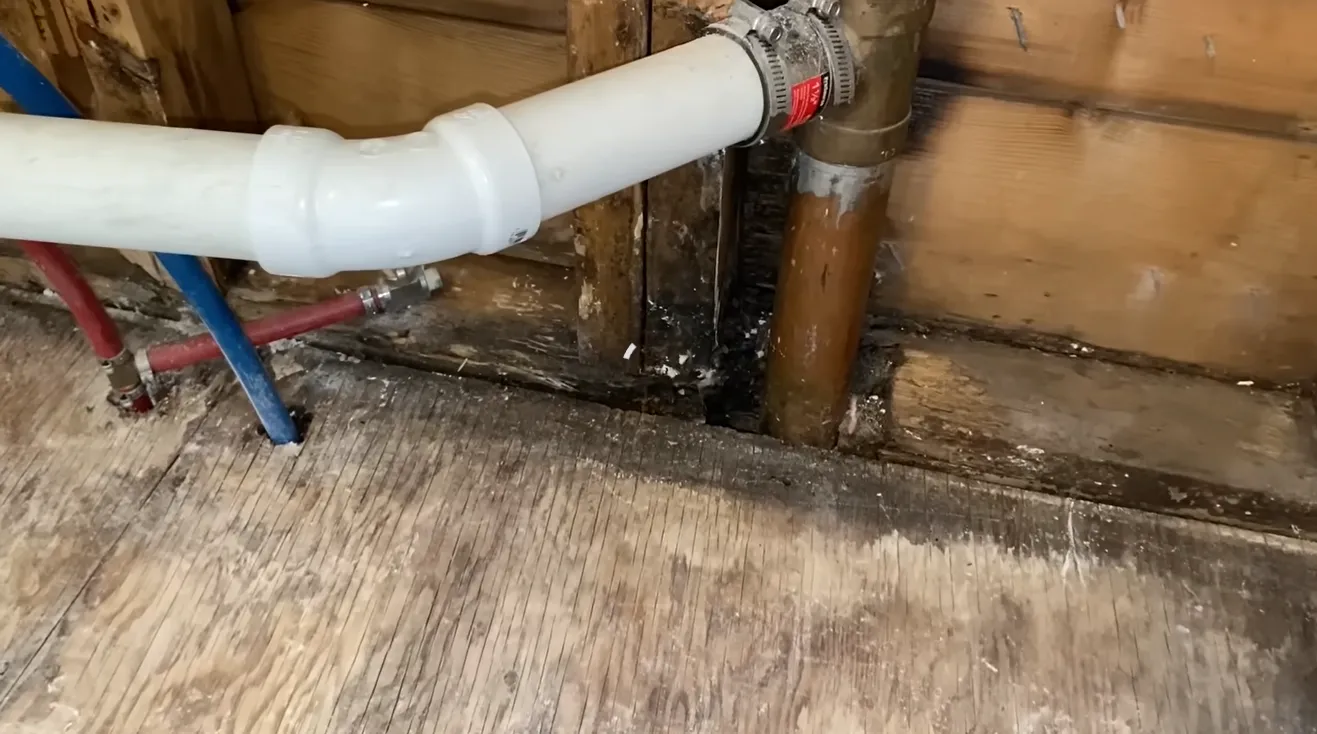
Lincoln’s first freeze lands around Oct 12, and Jan–Feb freeze-thaw cycles split copper and PEX in unheated crawlspaces, garages, and exterior walls — especially in older Hartley and Havelock homes. Pipes also burst when furnaces fail during outages or hose bibbs freeze. The damage isn’t the split; it’s the hundreds of gallons released before anyone notices.
The housing stock tells the story. Hartley’s homes date from 1890 to 1940, and Havelock — founded in 1890 with its brick streets — carries the same vintage plumbing: pipes run through uninsulated crawlspaces, exterior walls, and drafty additions that were never designed for a January cold snap. When temperatures swing through freeze and thaw, water expands as it freezes, contracts as it thaws, and the cycle works fittings and weak spots until something gives.
It’s not just old homes. Newer construction bursts pipes too — usually from a different cause: the furnace quits during a Lincoln Electric System outage, the house drops below freezing while the family is away, and a supply line in an exterior wall lets go. Or a hose bibb left connected through the first freeze backs ice into the pipe inside the wall. The common thread is always the same: water under pressure, a frozen section, and nowhere for the pressure to go.
24–48 hours
Mold growth window
EPA
3–5 days
Typical active drying
Commercial air movers + LGR dehumidifiers
$3,860
Average restoration job
Angi 2026 national benchmark, not a Lincoln quote
55°F
Minimum thermostat setting
Even when traveling in winter
What to Do in the First 15 Minutes
Find your main shutoff — usually in the basement, utility room, or where the water line enters — and turn it clockwise. Then kill power to any wet area at the breaker, move valuables upstairs, and call Water Damage Lincoln NE at +1 (402) 227-8606. Photograph everything before you move it; your adjuster and your restorer both need that record.
Do this in order, and don’t skip steps:
Shut off the water.. The main valve is typically in the basement near the front foundation wall, in a utility room, or where the service line enters the house. Turn it fully clockwise. If you can’t find it or it won’t budge, call Lincoln Water System’s emergency line — but keep looking; every minute matters.
Kill the power to wet areas.. Water and electricity don’t mix. If water is near outlets, the breaker panel, or the furnace, switch off those breakers — but never stand in water to reach the panel.
Open the faucets.. With the main off, open cold taps at the lowest and highest points to drain residual pressure from the lines.
Move what you can.. Electronics, rugs, boxes of photos — upstairs or onto blocks. Don’t risk injury moving soaked furniture; waterlogged drywall and carpet are shockingly heavy.
Photograph everything.. Wide shots of each room, close-ups of the break point, waterlines on walls. Your insurance adjuster needs this, and so do we.
Call us.. +1 (402) 227-8606. While you wait, don’t run the furnace if ductwork got wet, and don’t assume the water will “dry on its own.”
What a Burst Pipe Does to Your Home, Hour by Hour
In the first hour, water soaks carpet, pad, and drywall; by hour six it wicks up walls and into subfloor. Within 24–48 hours, mold can begin growing on wet drywall, wood, and carpet (EPA). After a few days, hardwood cups, drywall crumbles, and insulation mats down — turning a dry-out into a demolition and rebuild.
This timeline is why speed matters more than anything else in a burst-pipe call:
Hour 1
Hours 2–6
Hours 6–24
24–48 hours
Days 3+
The national numbers back this up: Angi’s 2026 data puts average water damage restoration at about $3,860, ranging from $1,383 to $6,384 — a national benchmark, not a Lincoln quote. Every hour you cut from that timeline pushes your job toward the low end of the range.
Water Damage Can't Wait
Every hour you wait, the damage spreads. Call now and get a straight answer about timing and next steps.
Our Burst Pipe Restoration Process
We stop the source, extract standing water with truck-mounted equipment, map moisture with meters and thermal imaging, then dry with commercial air movers and LGR dehumidifiers — checking daily until readings hit target. Unsalvageable drywall and insulation come out; then we rebuild. As a registered Nebraska contractor, we handle the job from flood to finish.
Here’s what the full job looks like:
Source control and assessment.. We confirm the leak is stopped, then inspect the full damage path — water travels, and the break point is rarely the edge of the damage.
Emergency extraction.. Truck-mounted extraction pulls standing water in a fraction of the time portable equipment takes. This is the single biggest lever on your final bill.
Moisture mapping.. Pin and pinless meters plus thermal imaging find water hiding behind baseboards, under pad, and inside wall cavities. Equipment goes where the water actually is.
Structural drying.. Commercial air movers and LGR dehumidifiers run with daily moisture readings until everything hits dry standard. A typical job takes 3–5 days of active drying.
Selective demolition.. Drywall, insulation, and flooring that can’t be saved come out — surgically, not wholesale. We remove what’s ruined and keep what’s sound.
Mold treatment.. Any colonization found during demolition is remediated under containment with HEPA filtration, per EPA guidance.
Rebuild.. Drywall, insulation, baseboards, flooring, paint — matched to your home. One crew, start to finish.
For the full picture of how cleanup, drying, and rebuild fit together, see our water damage repair page. If water is standing right now, our emergency water removal page covers what happens in the first hour after we arrive.
Preventing the Next Burst
Insulate pipes in crawlspaces and exterior walls, keep the thermostat at 55°F or higher when away, disconnect hoses before the Oct 12 first freeze, and know where your shutoff is before you need it. In Hartley and Havelock’s older housing stock, heat tape on vulnerable runs is cheap insurance against a January cold snap.
The prevention checklist that actually works in Lincoln:
Before the first freeze (~Oct 12)
All winter
Know your shutoff.
Heat tape the vulnerable runs.
Watch the furnace.
Ceiling damage from an upstairs burst is its own specialty — see ceiling water damage repair — and if mold has already taken hold, our mold remediation page covers the process. Questions about the process or ready to start? Reach us on the contact page.
Frequently Asked Questions
Confused about home insurance claim involving water damage
Most confusion comes from one distinction: sudden, accidental water damage — a burst pipe, a failed supply line — is typically covered, while gradual leaks and maintenance failures are not. Document the damage with photos before cleanup, keep every receipt, and call your insurer promptly. For the full claims walkthrough, see our insurance guide.
Will my homeowners insurance cover roof leak repairs and water damage?
Usually yes when the roof damage is sudden — hail, wind, or a fallen branch — and the interior water damage follows from it. Insurers typically pay for the interior damage and roof repair, minus your deductible. Slow leaks from worn shingles are maintenance and usually denied. Document the storm date; June 2026’s baseball-size hail damaged many Lincoln roofs.
How expensive is it to fix water damage?
Costs depend on category and square footage. As a national benchmark — not a Lincoln quote — Angi’s 2026 data puts average restoration around $3,860, ranging $1,383–$6,384. A single burst pipe in a laundry room costs far less than one that floods a finished basement. Fast extraction is the cheapest lever you control: every dry hour shrinks the bill.
Can you live in a house with a flooded basement?
Often yes, if the water is clean, the power is off in the wet area, and there’s no sewage involved. But don’t sleep below a soaked ceiling or run a furnace pulling air through mold. If water reached electrical panels, outlets, or the furnace itself, stay out until it’s checked. When in doubt, call us at +1 (402) 227-8606 first.
My basement just flooded. What should I do?
Shut off the water at the main valve if a pipe burst, then kill power to the wet area if it’s safe. Move valuables upstairs, photograph everything, and call Water Damage Lincoln NE at +1 (402) 227-8606 — EPA notes mold can begin within 24–48 hours. Don’t wait for the water to ‘dry on its own’; it won’t.
What does water damage restoration include?
For a burst pipe, it means stopping the leak, extracting standing water, mapping moisture with meters, drying with air movers and dehumidifiers, removing unsalvageable drywall and insulation, treating for mold, and rebuilding what was torn out. One call to +1 (402) 227-8606 covers inspection through final walkthrough as a registered Nebraska contractor.
How much should water remediation cost?
A small, fast-caught burst pipe cleanup can run well under the national average; a flooded finished basement runs well over it. Angi’s 2026 national benchmark — not a Lincoln quote — averages about $3,860, with a range of $1,383–$6,384. Get an on-site assessment before authorizing demolition; phone quotes for unseen damage are guesses.
Is it worth going through insurance for water damage?
It is when the covered repair clearly beats your deductible — a burst pipe that soaks two rooms almost always qualifies. It isn’t when the loss is near your deductible, since claims can raise premiums for years. Sudden pipe bursts are among the most straightforward claims insurers see. Photograph first, mitigate fast, file within days.
Burst pipe flooding your home? Call Water Damage Lincoln NE at +1 (402) 227-8606 — 24/7 emergency response.
Water Damage Lincoln NE · 2805 S 48Th St, Lincoln, NE 68506 · +1 (402) 227-8606
Call Water Damage Lincoln NE Now
Water damage gets worse every hour you wait. Call now for fast emergency response across Lincoln and Lancaster County.